
Rough-Terrain Cranes
Request a Job Quote
Submit a Quote Form and a Southway Sales Representative will be in contact with you as soon as possible.
GET A QUOTECapacities Up To 130 Tons
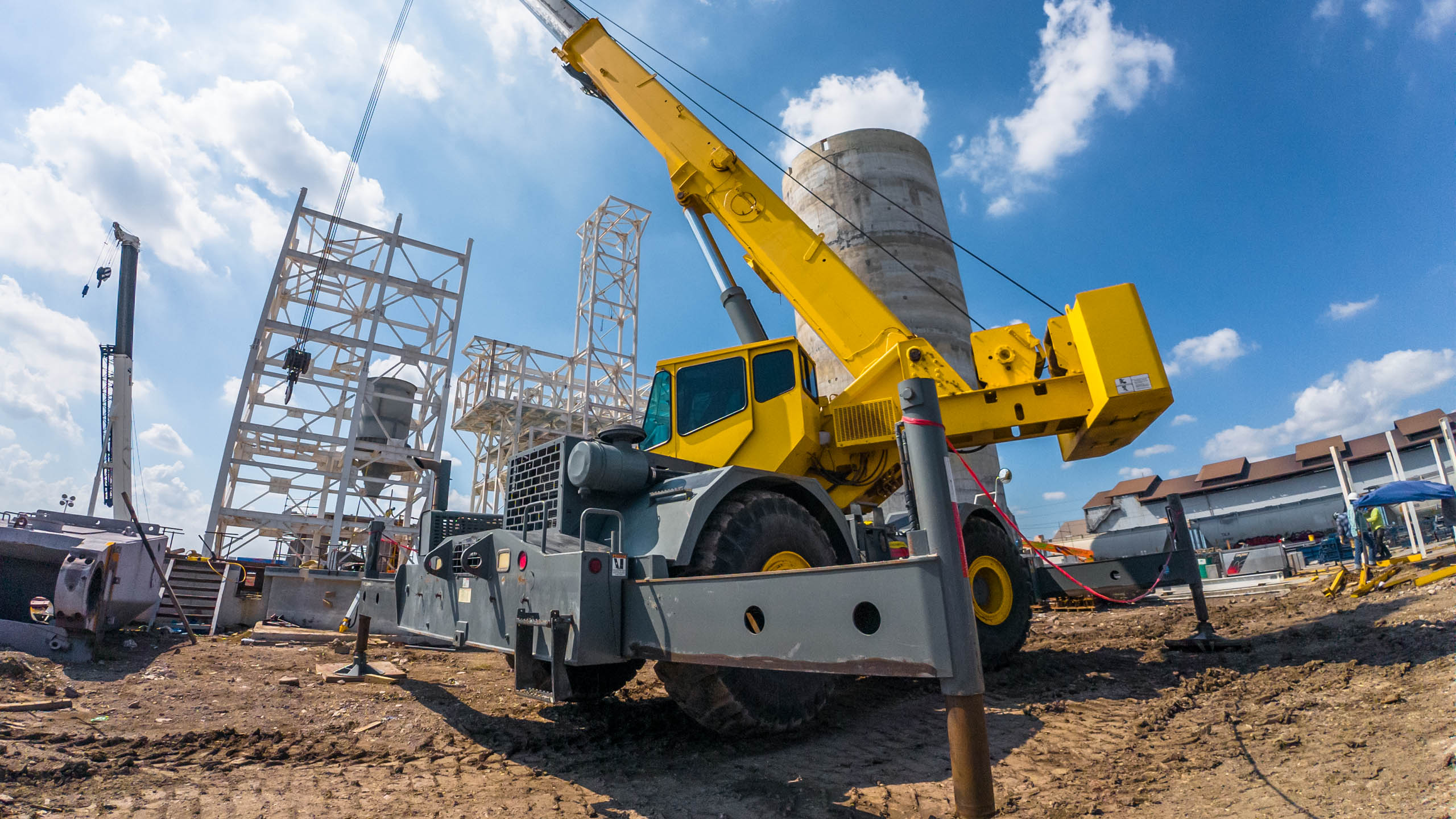
At Southway Crane & Rigging, we provide rough-terrain crane rentals for construction, industrial, utility, energy, and infrastructure projects throughout the United States. Our fleet ranges in lifting capacity from 30 to 130 tons, covering a wide variety of project needs from lighter support lifts to demanding structural and industrial work.
Key Features & Technical Capabilities
Rough-terrain cranes are engineered with a specific set of characteristics that distinguish them from other mobile crane types.
Four-Wheel Drive & All-Wheel Steering
Four-wheel drive and multiple steering modes give operators the flexibility to maneuver through tight spaces, travel across uneven ground, and navigate around obstacles without the site preparation requirements that larger crane types often demand.
Telescopic Boom Systems
Hydraulic telescopic booms can be extended or retracted to match the working radius and lift height of each application. Boom configuration is selected based on load weight, required reach, and site clearances.
Outrigger Systems
Outriggers extend from the crane body to establish a stable lift platform, even on uneven or soft ground. Crane mats or outrigger pads are used as needed to distribute loads across the outrigger footprint and improve stability where ground conditions vary.
Integrated Counterweights
Rough-terrain cranes carry their counterweights as part of the crane unit, simplifying transport and reducing setup requirements. This differs from larger crane configurations that require counterweight delivery and installation as a separate mobilization step.
Compact Footprint & Maneuverability
The compact design allows rough-terrain cranes to operate in areas with limited clearance and restricted working zones. A tight turning radius makes them particularly practical on congested job sites where larger cranes cannot be positioned efficiently.
Operated & Bare Rental Options
Operated Crane Rentals
Operated rentals include certified crane operators who manage crane setup, positioning, and lifting operations in accordance with project requirements and applicable safety standards. This option works well for critical lifts, complex site conditions, or applications requiring close coordination with site personnel.
Bare Crane Rentals
Bare rentals give contractors with qualified lifting personnel access to our late-model rough-terrain crane fleet. Equipment is operated by the contractor's own certified crane operators in accordance with manufacturer load charts and site-specific requirements.
Browse Crane Library
Technical Specifications | Crane Capabilities | Load Charts
Maintained, Inspected & Certified Equipment
Our equipment maintenance program includes:
- + Routine preventive maintenance
- + Scheduled inspections and servicing
- + Annual certifications
- + Load chart verification
- + Component inspections
- + Pre-delivery operational checks
Keeping our fleet properly maintained helps minimize unplanned downtime and supports reliable crane performance throughout your project schedule.
What to Expect During the Rental Process
Project Consultation
Our team reviews your project scope, including load weights, required lift height, working radius, site access conditions, and scheduling requirements, to determine whether a rough-terrain crane is the right solution for your application.
Crane Selection
We recommend the appropriate crane capacity and configuration based on your lifting requirements and site conditions. For projects where a rough-terrain crane will serve a support role alongside larger equipment, we coordinate crane selection across the full lift plan.
Site Planning & Logistics
Our team can assist with crane positioning, outrigger pad planning, site access review, and transportation logistics. Ground conditions and site-specific access requirements are assessed as part of the pre-mobilization process.
Crane Mobilization
Rough-terrain cranes require minimal mobilization costs relative to larger crane types and can typically be placed into service quickly after arriving on site, helping reduce downtime between lift phases.
Onsite Operations
For operated rentals, our certified operators work directly with site personnel throughout lifting operations. We remain available to support scheduling adjustments or configuration changes as project requirements develop.
Why Contractors Choose Rough-Terrain Cranes
Key advantages include:
- + Four-wheel drive and all-wheel steering for true off-road capability
- + Lower center of gravity for improved stability on uneven ground
- + Tighter turning radius than standard truck cranes
- + Minimal mobilization costs and fast setup times
- + Effective performance on soft, uncompacted, or partially prepared sites
- + Ability to reposition around a site without full disassembly
- + Well suited for both primary lifting and support crane roles
- + Compact footprint for use in restricted access areas
These characteristics make rough-terrain cranes a reliable option for industrial, utility, and remote construction work, as well as multi-crane projects where demanding site conditions require more capability than a standard highway-legal crane can provide.
Frequently Asked Questions
What is a rough-terrain crane used for?
Rough-terrain cranes are designed for off-road construction sites with uneven, muddy, or unpaved ground conditions where standard cranes cannot operate effectively. We use these cranes for steel erection, moving heavy equipment and materials, supporting larger crane operations, and projects in remote locations such as oil and gas sites, mining operations, and early-stage construction before ground leveling. Their four-wheel drive, large off-road tires, and compact design allow them to navigate challenging terrain while delivering reliable lifting performance for industrial maintenance, infrastructure development, and power line installations.
What size rough-terrain crane do I need?
Selecting the right rough-terrain crane depends on your maximum load weight, lift height, working radius, and site accessibility requirements. Southway Crane & Rigging offers rough-terrain cranes with capacities up to 130 tons, covering most project needs from lighter support lifts to heavy structural work. We evaluate your specific lift requirements including the weight of materials plus rigging equipment, maximum reach distance from the crane’s center pin, ground conditions, and space constraints to recommend the optimal crane size that meets your project requirements safely and cost-effectively.
How does a rough-terrain crane compare to a truck crane?
Rough-terrain cranes offer superior maneuverability, traction, and stability on uneven ground with features like four-wheel drive, larger off-road tires, a lower center of gravity, and tighter turning radius compared to truck cranes. While truck cranes excel on paved surfaces and can travel on highways between job sites, rough-terrain cranes are specifically engineered for challenging off-road conditions with better steering capabilities and all-wheel steering modes. Rough-terrain cranes require less site preparation, setup faster on uneven terrain, and provide more compact maneuverability in tight spaces, making them the preferred choice for construction sites with unpacked soil, muddy conditions, or limited access areas.
What is the capacity range for rough-terrain cranes?
Industry-standard rough-terrain cranes typically range from 30 to 165 tons lifting capacity, with Southway Crane & Rigging offering models up to 130 tons. The capacity you can safely lift decreases as boom length extends and working radius increases, which is why load charts are essential for each lift configuration. Smaller rough-terrain cranes in the 30 to 50 ton range handle most support lifting and material placement tasks, while larger models up to 130 tons accommodate heavy structural components, large equipment installation, and demanding industrial applications with boom lengths extending from approximately 95 feet to over 150 feet depending on the model.
How long does rough-terrain crane setup take?
Smaller rough-terrain cranes up to 100 tons can typically be positioned and ready to lift within minutes once on site, requiring only outrigger deployment and leveling. Setup time depends on site conditions, required ground preparation, and whether counterweights or outrigger extensions need installation. The hydraulic outrigger system deploys quickly, but proper setup demands careful assessment of ground bearing pressure, ensuring outriggers are fully extended to manufacturer specifications, positioning appropriate load-bearing pads, and verifying the crane is level before operations. Southway Crane’s experienced operators ensure efficient, safe setup while adhering to all OSHA requirements for crane stability and ground conditions.
What conditions are required for a rough-terrain crane?
Rough-terrain cranes require adequate ground bearing capacity to support outrigger loads, which can exceed 100,000 pounds per outrigger depending on crane size and lift configuration. The controlling entity must provide allowable ground bearing pressure information, and we assess soil conditions to determine if matting, cribbing, or additional ground preparation is necessary. While rough-terrain cranes handle uneven surfaces better than other crane types, they still need sufficient space for outrigger extension, clearance from overhead hazards and underground utilities, and wind speeds below 10 meters per second during operations. Our operators perform comprehensive site evaluations to verify ground conditions, establish safe crane positioning, and ensure compliance with all safety requirements.
What is the maximum reach of a rough-terrain crane?
Maximum reach varies by model and configuration, with Southway Crane’s rough-terrain cranes offering main boom lengths up to approximately 110 to 154 feet depending on the unit. When equipped with telescoping jibs or extensions, total tip height can extend significantly higher, with some configurations reaching over 200 feet. However, actual safe working capacity decreases substantially with increased boom length and radius. The effective reach for your specific lift depends on load weight, boom angle, outrigger configuration, and manufacturer load chart specifications. Our team works with detailed load charts and lift plans to determine the optimal crane configuration that provides necessary reach while maintaining safe lifting capacity for your application.
What site preparation is required?
Site preparation requirements depend on soil bearing capacity, crane size, and lift specifications. At minimum, the setup area should be firm, drained, and graded to provide stable support for outrigger loads, with the controlling entity responsible for providing ground bearing pressure specifications per OSHA 1926.1402. Proper preparation often includes installing timber mats or engineered outrigger pads to distribute ground pressure, verifying adequate clearances from trenches and underground utilities, ensuring level positioning within manufacturer specifications, and confirming sufficient space for full outrigger extension. Southway Crane’s operators conduct pre-lift site assessments, calculate ground bearing pressures for each outrigger position, and coordinate necessary ground improvements to ensure safe crane operations that protect both personnel and equipment.
Are operators included with rough-terrain crane rentals?
Yes, Southway Crane & Rigging provides NCCCO certified operators with all rough-terrain crane rentals, ensuring qualified professionals handle all aspects of crane operation and safety compliance. Our operators hold current CCO mobile crane operator certifications meeting OSHA requirements, undergo regular training on manufacturer-specific equipment, and maintain certifications through ongoing education and practical examination. We handle all operator qualifications, medical certifications, and compliance documentation, so you receive a complete turnkey lifting solution. Our experienced operators bring extensive knowledge of load charts, rigging requirements, safety protocols, and efficient crane operation, allowing you to focus on your project while we manage all technical and regulatory aspects of crane services.